Understand your insurance coverage.
Resources to help
guide treatment
If you and your child’s doctor decide FAYUVI is the right choice, these resources may be helpful.

Not an actual patient or caregiver.
Download FAYUVI materials
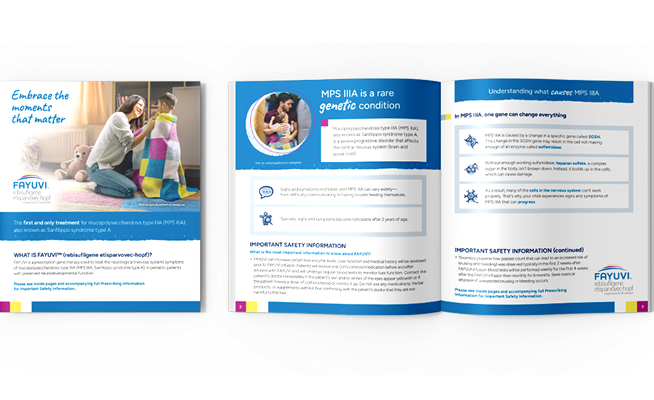
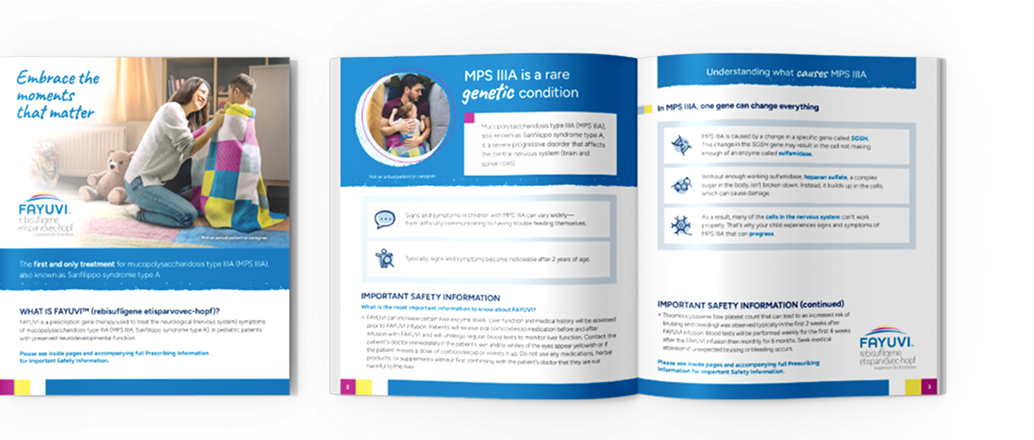
FAYUVI Patient Brochure
Learn about FAYUVI, including how it works and the efficacy and safety seen in the clinical studies.
Download Now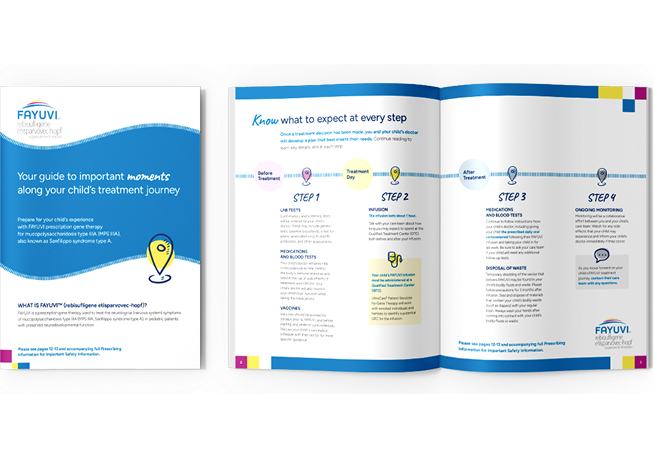
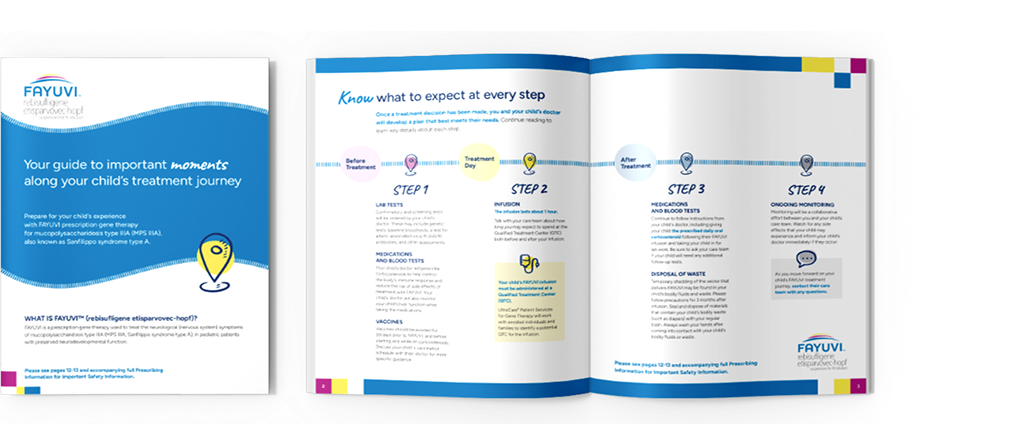
FAYUVI Treatment Roadmap
Understand important steps in the treatment experience so you know what to expect and how to prepare your child.
Download NowDedicated support with UltraCare® Patient Services for Gene Therapy
Once enrolled, UltraCare can help you throughout your child’s treatment journey


Help determine your eligibility for financial assistance and travel assistance support.

Get to know the steps before and after treatment with FAYUVI.
Treatments have a list price, though this may not be what you pay or are responsible for. Your out-of-pocket costs are highly dependent on your insurance plan and your insurer’s coverage policy. UltraCare is committed to helping enrolled individuals and families understand their insurance coverage through a benefits investigation.
Our UltraCare Gene Therapy Guides are experienced professionals who can help you and your family along the gene therapy journey. They can directly answer your questions regarding treatment access, help you navigate logistical challenges you may encounter while preparing for treatment, and provide post-infusion educational support.

To learn more about our Patient Support Program, please visit UltraCareSupport.com.
If you are already enrolled in UltraCare, call your UltraCare Gene Therapy Guide today at 1-888-756-8657; option 1.
Embrace communities of support
Connect with others who are also navigating their child’s path with mucopolysaccharidosis type IIIA (MPS IIIA), or with those who can provide support.
Explore advocacy groups based in the US*
Cure Sanfilippo Foundation
Team Sanfilippo Foundation

National MPS Society

Global Genes
National Organization for Rare Disorders (NORD)

International Sanfilippo Syndrome Alliance (ISSA)

Rare Foundation
*
Inclusion of these links is not intended as an endorsement of these organizations or the services
they may offer. The independent organizations listed are responsible for the content or services
described on their websites.
 MORE
WHAT IS FAYUVI™ (rebisufligene etisparvovec-hopf)?
FAYUVI is a prescription gene therapy used to treat the neurological (nervous system) symptoms of mucopolysaccharidosis type IIIA (MPS IIIA, Sanfilippo syndrome type A), in pediatric patients with preserved neurodevelopmental function.
IMPORTANT SAFETY INFORMATION
What is the most important information to know about FAYUVI?
- FAYUVI can increase certain liver enzyme levels. Liver function and medical history will be assessed prior to FAYUVI infusion. Patients will receive oral corticosteroid medication before and after infusion with FAYUVI and will undergo regular blood tests to monitor liver function. Contact the patient’s doctor immediately if the patient’s skin and/or whites of the eyes appear yellowish or if the patient misses a dose of corticosteroid or vomits it up. Do not use any medications, herbal products, or supplements without first confirming with the patient’s doctor that they are not harmful to the liver.
- Thrombocytopenia (low platelet count that can lead to an increased risk of bruising and bleeding) was observed typically in the first 2 weeks after FAYUVI infusion. Blood tests will be performed weekly for the first 4 weeks after the FAYUVI infusion then monthly for 6 months. Seek medical attention if unexpected bruising or bleeding occurs.
- Thrombotic Microangiopathy (TMA) (decreased platelets and red blood cells, acute kidney injury, and a higher risk of bruising or bleeding) has been reported with the use of AAV gene therapies. While there have been no cases of TMA associated with FAYUVI in clinical studies, patients should be monitored for signs and symptoms of TMA, with blood tests performed to assess platelet counts during the first 4 weeks after the FAYUVI infusion. Seek immediate medical attention if the patient experiences unexpected bruising or bleeding, seizures, or decreased urine output.
- Infusion reactions, including hypersensitivity reactions and anaphylaxis, may occur during and after infusion with FAYUVI. Patients will be monitored during and after FAYUVI infusion. If an infusion-related reaction occurs, the FAYUVI infusion may be paused, and additional medical treatment provided as needed. Symptoms may include low blood pressure, fever, rapid, strong, or irregular heartbeat, nausea, vomiting, chills, or headache. Immediately inform medical staff if the patient experiences these symptoms.
- Cancer may occur after AAV gene therapies like FAYUVI. If cancer develops, contact the patient’s doctor and Ultragenyx Pharmaceutical Inc. at 1-888-756-8657.
Are there any considerations for vaccination schedules and FAYUVI?
- Vaccines should be avoided 30 days before the FAYUVI infusion, before starting corticosteroids, and while on corticosteroid therapy.
What is important to know about pregnancy?
- FAYUVI should not be given during pregnancy. If a patient can become pregnant, a pregnancy test must show that the patient is not pregnant before treatment with FAYUVI.
Are there any precautions that need to be considered when handling a patient’s bodily fluids or waste?
- Temporary shedding of the vector that delivers FAYUVI may be found in patient bodily fluids or waste. Family members and caregivers should use proper hand hygiene, such as hand washing when coming into direct contact with patient bodily fluids or waste. To properly dispose of materials that may be contaminated with the patient’s bodily fluids or waste, place them in a sealed bag before discarding them in the regular trash. Precautions should be followed for 3 months after FAYUVI infusion.
What are the possible or likely side effects of FAYUVI?
The most common side effects that occurred in patients treated with FAYUVI were:
- Increased liver enzymes
- Vomiting
- Abnormal behavior
- Diarrhea
- Fever
- Decreased white blood cell count
- Cushingoid features (changes caused by high steroid levels such as rounded face, weight gain, or increased body fat)
- Decreased appetite
- Decreased platelet count
- Low red blood cell levels
- Constipation
- Nausea
- Increased digestive enzyme
- Increased alkaline phosphatase enzymes
- Seizure
- Enlarged liver
- Muscle stiffness or spasms
- Low potassium levels
- Difficulty walking or changes in balance
- Low adrenal hormone levels or adrenal gland problems
These are not all the possible side effects of FAYUVI. Contact the patient’s doctor right away if the patient experiences any side effects.
You are encouraged to report negative side effects of prescription drugs to the FDA.
Visit www.fda.gov/medwatch or call 1-800-FDA-1088. You may also report side effects to Ultragenyx Pharmaceutical Inc. at 1-888-756-8657.
Please see the full Prescribing Information for FAYUVI.